Digital marketing is the process of promoting a business, product or service through online platforms such as search engines, websites, social media, email and mobile applications.
Unlike traditional marketing, which uses newspapers, television, radio and printed materials, digital marketing helps businesses communicate with their target customers through the internet. It also allows businesses to measure campaign performance, customer behaviour, website traffic, leads and sales.
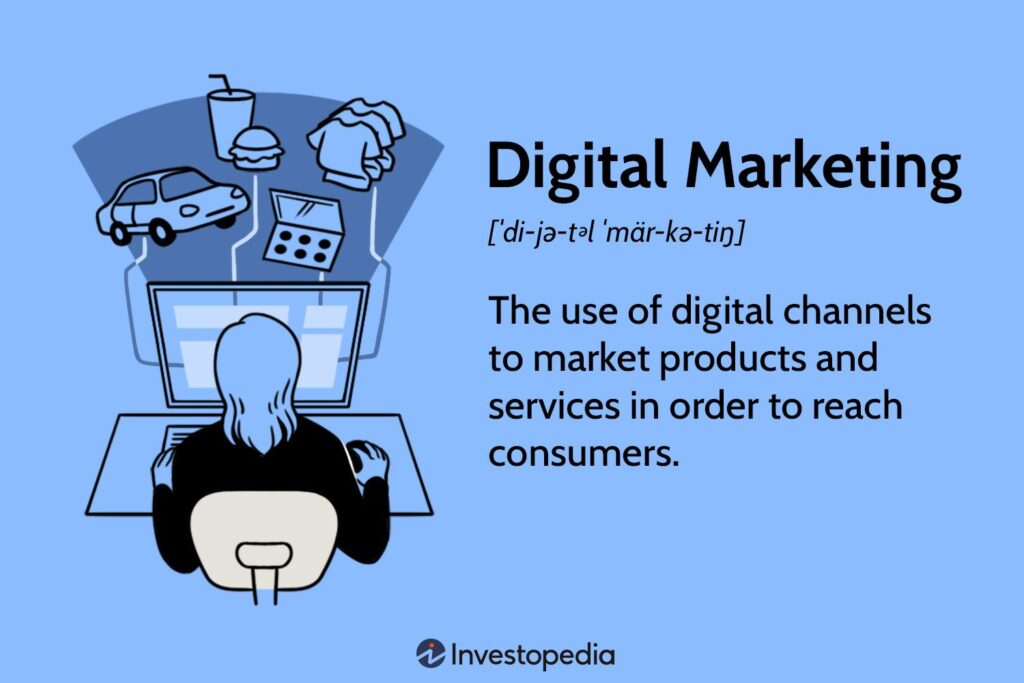
Today, digital marketing is important for startups, local businesses, e-commerce stores and established companies because customers frequently use Google, Instagram, Facebook, YouTube and other online platforms before making a purchase.
Digital marketing begins by understanding the target audience. A business must identify who its customers are, what they are searching for and which digital platforms they use.
After identifying the audience, a digital marketing strategy is created using channels such as SEO, social media, paid advertising, content marketing and email marketing.
For example, when someone searches for a service on Google, SEO can help a business website appear in the search results. Social media marketing can then build awareness, while paid advertisements can generate immediate leads and sales.
Major Types of Digital Marketing
1. Search Engine Optimization
Search Engine Optimization, commonly known as SEO, is the process of improving a website’s visibility on search engines such as Google.
SEO includes:
- Keyword research
- On-page optimization
- Technical SEO
- Content creation
- Local SEO
- Link building
- Website performance improvement
The main goal of SEO is to generate organic website traffic without paying for every click.
2. Social Media Marketing
Social media marketing involves promoting a brand through platforms such as Instagram, Facebook, LinkedIn, YouTube and X.
It includes creating posts, reels, videos, stories, advertisements and promotional campaigns. Social media marketing helps businesses increase brand awareness, customer engagement and enquiries.
3. Pay-Per-Click Advertising
Pay-per-click advertising allows businesses to display paid advertisements on Google, Facebook, Instagram and other platforms.
The advertiser pays when a person clicks the advertisement or completes a particular action. Paid advertising can generate faster results when campaigns are properly targeted and optimized.
4. Content Marketing
Content marketing is the process of creating valuable and informative content for a target audience.
Content can include:
- Blog articles
- Videos
- Infographics
- Social-media posts
- Case studies
- E-books
- Guides
Quality content builds trust and helps customers understand a brand’s products or services.
5. Email Marketing
Email marketing is used to communicate directly with potential and existing customers. Businesses can send promotional offers, product updates, educational content and personalized recommendations through email.
6. Affiliate Marketing
Affiliate marketing allows individuals or businesses to promote another company’s products and receive a commission for every successful sale or lead.
7. Influencer Marketing
Influencer marketing involves collaborating with social-media creators who have an established audience. Influencers promote products or services through reviews, videos, posts and recommendations.
Benefits of Digital Marketing
Digital marketing offers several advantages:
- Helps businesses reach a targeted audience
- Increases website traffic and online visibility
- Generates enquiries, leads and sales
- Provides measurable campaign results
- Supports local and global marketing
- Improves customer communication
- Can be more cost-effective than traditional advertising
- Helps businesses compete with larger brands
Digital marketing platforms also provide useful information about customer demographics, interests, locations and online behaviour.
Digital Marketing Tools
Some commonly used digital marketing tools include:
- Google Analytics
- Google Search Console
- Google Ads
- Meta Ads Manager
- Google Keyword Planner
- Semrush
- Ahrefs
- Canva
- Mailchimp
- WordPress
These tools help marketers research keywords, create content, run advertisements and measure performance.
Why Is Digital Marketing Important for Businesses?
Customers now research businesses online before contacting them or purchasing a product. A company without a professional online presence may lose potential customers to competitors.
Digital marketing helps a business appear when customers search for relevant products or services. It also allows companies to maintain long-term relationships through social media, email and valuable content.
Conclusion
Digital marketing is one of the most effective ways to promote a business in the modern market. It combines SEO, social media, paid advertising, content marketing and other online strategies to attract customers and generate measurable growth.
A successful digital marketing strategy should focus on the right audience, useful content, consistent communication and continuous performance improvement.
Frequently Asked Questions
Is digital marketing suitable for small businesses?
Yes. Small businesses can use SEO, social media and local advertisements to reach customers within a controlled budget.
What is the difference between SEO and digital marketing?
SEO is one part of digital marketing. Digital marketing also includes social media, email marketing, content marketing and paid advertising.
How long does digital marketing take to produce results?
Paid advertisements can generate faster results, while SEO and organic marketing generally require consistent work over several months.
CTA: Looking for professional digital marketing services? Contact Usersync Digital to improve your online visibility, generate qualified leads and grow your business.